
Alcohol - ADHD's Deceitful Friend
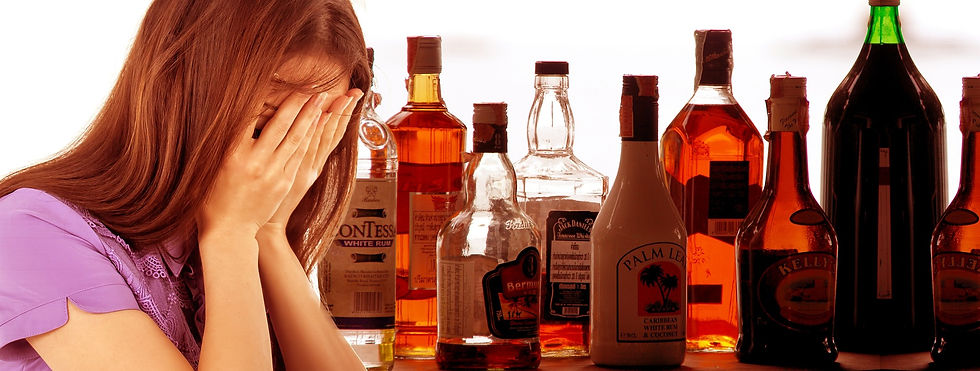
The tangled web of relationships between alcohol overuse and ADHD
The interplay between alcohol and ADHD is complicated, multifaceted and variable between individuals. There are still some inconsistencies in the literature, but the research evidence is growing to give strong indication of association. For example, some studies suggest that up to 43% of adults with ADHD will develop an alcohol use disorder at some point in their lives; approximately 15% of adults with ADHD have reported abusing alcohol or drugs in the past year, a rate nearly three times higher than those without ADHD; Adults with ADHD are more likely to engage in binge drinking, with one study showing that 42.1% of those with ADHD reported consuming 5–6 or more units of alcohol on a typical drinking day than non-ADHD participants. Studies suggest that 21% of men with ADHD and 13% of women with ADHD struggle with alcohol or drug abuse. Approximately 19% of young adults without ADHD have a lifetime alcohol use disorder, compared to over 35% of those with ADHD. (2023/4 Adult Psychiatric Morbidity Survey (APMS)
For anyone, alcohol is a relatively cheap, available and socially sanctioned way of achieving short term relief from the stresses and strains of daily life.
For individuals with ADHD, navigating the world can present multiple, sometime extreme, challenges from which they also look for respite. However, the particularly complex interplay of brain chemistry, psychological factors, genetics, and social challenges faced by people with ADHD make the potential for alcohol misuse much stronger. Understanding these connections will hopefully enable people to overcome the self-blame and shame that can reinforce, rather than limit, a
lcohol overuse.
Starting with the Neurobiology…….
Individuals with Attention-Deficit/Hyperactivity Disorder (ADHD) often exhibit a heightened sensitivity to the effects of alcohol, which is rooted in the interplay between the neurobiology of ADHD and the pharmacological actions of alcohol.
Impaired Dopamine and Reward SystemThe foundational neurobiology of ADHD involves dysregulation of the dopamine system (lower baseline dopamine/less efficient dopamine pathways), particularly in the brain's reward and motivation pathways. This can result in a chronically under-stimulated, dopamine-deficient state. Alcohol consumption temporarily increases the release of dopamine in these same pathways. For an individual with ADHD, this surge can produce a more pronounced sense of reward, pleasure, or even a feeling of "normalisation" as it momentarily alleviates the underlying dopamine deficit. This heightened positive reinforcement can make alcohol more appealing and increase the risk of developing a pattern of problematic use, as the individual seeks to replicate this effect.
Exacerbation of Executive Function DeficitsADHD is characterised by impairments in executive functions, which are governed by the prefrontal cortex. These functions include impulse control, task initiation, working memory, emotional regulation, foreseeing consequences and decision-making. Alcohol is a central nervous system depressant that is well-known to impair these very same executive functions in any individual. In a brain already challenged by ADHD, even small amounts of alcohol can have a disproportionately large and rapid disinhibiting effect. This can lead to a significant amplification of core ADHD traits, such as increased impulsivity and poorer judgement. This can make it harder to resist the impulse to drink, regulate the amount consumed, and make decisions that align with long-term well-being and goals. Alcohol further impairs the prefrontal cortex, creating a cycle where impulsivity leads to drinking, and drinking leads to more impulsivity and greater emotional lability, compared to the effect on a neurotypical individual.

Psychosocial factors
Many individuals with ADHD use alcohol as a way to "self-medicate" against how they feel about the challenges of their condition. Remembering that, whether diagnosed or not, ADHD has been present since childhood so a person may have experienced decades of feeling ‘out of sorts’ with the world; knowing what to do but, somehow, just not managing to do it; feeling incompetent; unreliable, confused and angry about their own behaviour; experiencing subtle, and not so subtle, criticism from others; self-criticising and self-blaming. It is easy to understand how prolonged and repeated experiences like this can lead to low mood, anxiety, anger and overwhelm. Until a person develops strategies to ameliorate their ADHD challenges, alcohol can feel like it provides a necessary respite from the world.
Alcohol may be used to quieten a "noisy" or restless mind: For those with hyperactive or combined-type ADHD, the constant internal feeling of restlessness or being "driven by a motor" can be exhausting. Alcohol, as a depressant, can temporarily quieten this internal noise and induce a feeling of calm.
People with ADHD often experience emotions with greater intensity and have difficulty regulating them. They may be subject to Rejection Sensitivity Dysphoria (RSD), an extreme emotional sensitivity to perceived criticism or rejection, and experience social anxiety. In the short term, alcohol can dampen or even numb these very painful feelings. Many people with ADHD feel awkward in social situations experiencing difficulties with social cues, impulsively interrupting others, or struggling to follow conversations – this can make social situations stressful. Alcohol may be used to lower inhibitions and reduce social anxiety, making it feel easier to connect with others.
Sleep difficulties are common in ADHD and alcohol may be used as a sedative to aid with sleep initiation. While it may provide short-term relief, this pattern creates a strong psychological link between alcohol and symptom management, establishing a high-risk pathway toward alcohol overuse. The subsequent rebound effects, such as increased anxiety or disrupted sleep architecture once the alcohol wears off, can then worsen the core ADHD symptoms, perpetuating a cycle of use.
In a similar way, the hyper-focus that is a common feature of ADHD for some is another dysregulated state rather than an healthily chosen and controlled one. Although this state can lead to bouts of high productivity, it has a driven, compulsive quality that can easily lead to burnout. When the task is complete or it is time to stop, people often find that they cannot ‘switch off’. They are ‘tired but wired’ and cannot achieve relaxation. The short-term fix of alcohol can give fairly quick, but short term, relief – relief with consequences.
A history of struggling in school, difficulties maintaining friendships, and feeling misunderstood can lead to low self-esteem and anxiety which can be given short term relief by alcohol. In social settings, drinking may be perceived as a way to fit in, bond with peers, and feel "normal." Reports suggest that people with ADHD are likely to begin drinking at a younger age and to drink more excessively.
Influence of genetics
A number of genes have been identified as having relevance to ADHD. Here, we will briefly look at one – COMT and its role in the relationship between ADHD and Alcohol misuse.
The Catechol-O-methyltransferase (COMT) gene provides instructions for producing the COMT enzyme, which is critical for breaking down catecholamine neurotransmitters, most notably dopamine, in the prefrontal cortex (PFC). The gene's influence on the relationship between Attention-Deficit/Hyperactivity Disorder (ADHD) and Alcohol Use Disorder (AUD) is linked to its effect on dopamine regulation.
Dopamine and the Prefrontal Cortex: The PFC is central to executive functions, including impulse control, motivation, and reward processing. Dopamine signalling in this region is fundamental to these processes. Individuals with ADHD are often theorised to have dysregulated dopamine systems and some studies have indicated that the Val allele, see below, is more common in children with ADHD than in ‘controls’.
The COMT Val158Met Polymorphism: A common variation (polymorphism) in the COMT gene, known as Val158Met, results in two main versions (alleles) of the enzyme:- Val (Valine) Allele: Produces a more active enzyme that breaks down dopamine more rapidly. This leads to lower baseline dopamine levels in the PFC. There is a notable body of evidence to suggest that people with ADHD are more likely to have the Val allele variant.- Met (Methionine) Allele: Produces a less active, less stable enzyme, resulting in a slower breakdown of dopamine and consequently higher baseline dopamine levels in the PFC.
Influence of COMT on ADHD and Alcohol Misuse- The Val allele (lower dopamine) is often associated with poorer executive function and a potential "reward deficiency". Individuals with this allele may be more prone to seek external sources of stimulation and reward, such as alcohol, to temporarily increase dopamine levels. This creates a neurobiological vulnerability, potentially increasing the risk of misusing alcohol, particularly in the context of the impulsivity and poor self-regulation characteristic of ADHD.- The Met allele (higher dopamine) is sometimes considered protective against certain cognitive deficits but may confer vulnerability to anxiety and stress responses.
So the interaction is complex, and research is ongoing.
The COMT gene, specifically the Val158Met polymorphism, acts as a modulator of dopamine availability in the PFC. The Val allele, by creating a state of lower tonic dopamine, may amplify the underlying neurobiological vulnerability for alcohol misuse in individuals with ADHD as a form of "self-medication" to correct a perceived reward deficit and manage executive dysfunction.
Genetic Predisposition Both ADHD and alcohol use disorder (AUD) are known to have a significant genetic component. Studies show that they often run in families, and some of the genes that increase the risk for ADHD may also increase the risk for substance use disorders, including AUD. This means a person with a family history of both may be at a higher risk.
To sum up........
Alcohol has often been referred to as a ‘Fickle Friend’ or ‘the Devil’s Candy’ to highlight how its initial alure hides the longer term consequences of its use. For people with ADHD, those consequences are all the more problematic and harmful. The importance of finding ways to manage the challenges posed by ADHD is clear if we are not to put ourselves at risk of falling under alcohol’s ‘spell’.
References
Faraone, S. V., & Wilens, T. E. (2007). Effect of stimulant medications for attention-deficit/hyperactivity disorder on later substance use and the potential for stimulant misuse, abuse, and diversion. The Journal of Clinical Psychiatry, 68(Suppl 11), 15–22.
Groenman, A. P., Janssen, T. W. P., & Oosterlaan, J. (2017). The combination of alcohol and ADHD: a cocktail for a risky lifestyle. Journal of Attention Disorders, 21(10), 863-875. https://doi.org/10.1177/1087054714524458
Kollins, S. H., McClernon, F. J., & Fuemmeler, B. F. (2005). Association between smoking and attention-deficit/hyperactivity disorder symptoms in a population-based sample of young adults. Archives of General Psychiatry, 62(10), 1142–1147.
Knouse, L. E., & Mitchell, J. T. (2015). A cognitive-behavioral model of ADHD-related functional impairment. Cognitive and Behavioral Practice, 22(3), 290-300.Lee, S. S., Humphreys, K. L., Flory, K., Rogers, R., & T. (2011). Prospective association of childhood attention-deficit/hyperactivity disorder (ADHD) and substance use and abuse/dependence: a meta-analytic review. Clinical Psychology Review, 31(3), 328–341.
Luderer, M , Quiroga J A R , Faraone Stephen V, Zhang-James Yanli , Reif A (2021) Alcohol use disorders and ADHD. Neuroscience & Biobehavioral Reviews. Volume 128, September 2021, Pages 648-660
Michielsen, M., Semeijn, E., Compen, F. R., van de Ven, P. M., Aerts, L., & Bekker, E. M. (2020). The relationship between alcohol use and ADHD symptoms in a sample of college students: The role of sleep quality and sleep duration. Journal of American College Health, 1-9. https://doi.org/10.1080/07448481.2020.1793744
Shaw, P., Stringaris, A., Nigg, J., & Leibenluft, E. (2014). Emotion dysregulation in attention deficit hyperactivity disorder. The American Journal of Psychiatry, 171(3), 276–293.
Volkow, N. D., Wang, G. J., Kollins, S. H., Wigal, T. L., Newcorn, J. H., Telang, F., Fowler, J. S., Zhu, W., Logan, J., Ma, Y., Pradhan, K., Vaska, P., & Swanson, J. M. (2009). Evaluating dopamine reward pathway in ADHD: clinical implications. JAMA, 302(10), 1084–1091. https://doi.org/10.1001/jama.2009.1308
Weiss, M. D., & prevailing, T. (2012). ADHD and substance use disorders: the complex overlap and therapeutic challenges. Current Psychiatry Reports, 14(5), 596-604.
Wilens, T. E., Martelon, M., Anderson, J. P., Shelley-Abrahamson, R., & Biederman, J. (2013). Difficulties in driving and in adults with attention-deficit/hyperactivity disorder: a literature review. Expert Review of Neurotherapeutics, 13(2), 205-214. (Note: While about driving, this paper discusses impulsivity and risk-taking relevant to the broader topic).
Wilens, T. E., & Spencer, T. J. (2010). Understanding attention-deficit/hyperactivity disorder from childhood to adulthood. Postgraduate Medicine, 122(5), 97–109. https://doi.org/10.3810/pgm.2010.09.2206
Wimberley, T., et al. (2021). A comprehensive nationwide study of the incidence, prevalence, and mortality of recognized alcohol use disorders in patients with ADHD. The American Journal of Psychiatry, 178(3), 269-277.
Young, S. (2013). The 'shame of ADHD': a qualitative study of the first-person experience of shame in adults with ADHD. ADHD Attention Deficit and Hyperactivity Disorders, 5(2), 113-124.


Comments