
Bernadette Bustin CPsychol; AFBPsS
Chartered Psychologist
Counselling Psychologist
Serving Brecon and surrounding areas and UK-wide online
Binge Eating Therapy
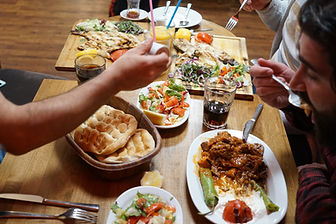
Are you looking for help to control your eating?
Perhaps you eat unusually large portions, eat quickly, or continually ‘graze’ on food throughout the day. You might find that you just can’t stop once you have one packet of crisps or a bar of chocolate. Do you regularly eat until you feel uncomfortably full? Maybe you hide food from other people in your household and feel anxious if the food cupboards are not full. You might feel disgusted, guilty, ashamed or depressed after a binge. Do you find yourself thinking about food most of the time and just waiting for the opportunity to get away from people so that you can eat again?
These are some of the experiences of people who feel that their eating is out of control in some way.
I just need to find the willpower to stop over eating
Over eating and binge eating are not problems of willpower. Although it is quite possible that your over eating did start as a choice, no one with compulsive or disordered eating can simply stop. In fact, part of you might definitely be very fearful of stopping. Unfortunately, other people have probably also told you that you need more willpower. “Just stop eating so much” – as if it was that easy.
But binge eating is not an addiction….is it?
Whether it is technically an addiction or not, it feels compulsive, you don’t have the control over it you would like and it is having a negative impact on you and your life. You deserve help with it.
Unlike managing addiction to drugs or alcohol, gambling and pornography - where you may be aiming for abstinence, you cannot abstain from food. In fact, just depriving ourselves of certain foods increases their reward value in our brains. Naturally, we are then much more likely to seek them out and to overeat them if we have the opportunity. In this way, it is a unique kind of addictive behaviour .
But other people manage their eating….. What’s wrong with me?
Binge eating is a very complex experience. It is influenced by the particular make up of your own biology, your psychological tendencies, your lifetime experiences, the social culture you live in, and how your particular set of genes is expressed at different times.
Eating, and eating to fullness, activates our reward system and can soothe distress. You may have a history of trauma, neglect or abuse that has left your nervous system in greater need of soothing. Or you may need distraction from day-to-day stresses. Perhaps you were rewarded with food as a child or it was the only thing you found comfort in. Many of us were taught to be dissatisfied with our bodies and started dieting – only to find that it was too hard and our bodies weren’t designed to be thin. So we gave up and ate to deal with our feelings of failure. Of course, some people are very good at dieting – too good. They can become over-controlling with their food to the point of developing Anorexia Nervosa.
Unfortunately, our culture, in subtle and not-so-subtle ways, gives the pervasive message that over eating, and being overweight, is in some way “bad”. If we eat excessively, we can be seen as weak - or even immoral. The message we receive is that ‘good people have self- control’ (and are probably thin). From childhood experiences, we might already hold the belief that there is something wrong with us and a culture of ‘thin is good’ just amplifies that belief and isolates us even further.
Of course,the way that our culture shames bodies of different shapes can be traumatizing in itself. We can feel blamed and isolated; we prioritise shape over health and we can hold a fundamental fear of abandonment and rejection if we don’t buy into the self-control model.
It is not surprising that shame, low self-esteem, self-criticism, anxiety and depression are common alongside binge eating. Furthermore, it can be trying to avoid these intensely negative feelings, that drives us to over-eat yet again.
How can psychological therapy help with binge eating?
There is no ‘off the shelf’ package for everyone.
Your binge eating is probably a real attempt to cope, or even survive, so therapy will need to allow you to explore deeply enough to resolve past trauma, along with present stresses, and for you to learn to trust your own body again. Though it may not feel like it right now, your body is an ally, and not a problem to be fixed. Approaching how you think about food and eating is only a part of our work.
Therapy happens with close attunement to you as an individual and how you are right now. Some days you might want to go a bit further and other days you might need to stay right where you are – or even go back a few steps.
We will treat every well intentioned step as a real success and not resort to critical judgements such as ‘relapse’ or ‘failure’ when things don’t go as hoped. Keeping in mind how body shame, and the ‘thin ideal’ are built into our culture, we can bring kindness and understanding to our desperate attempts to change our shape. We will also be mindful that you may well be terrified of letting go of binge or over-eating for fear of what will happen without it.
Therapy really can help. It might go against your normal style of chastising yourself, but we will take a gentle, kind, and patient approach to your struggles so that you can finally start to move towards feeling at home in your body.
Book a free consultation
I offer a free 15 - 30 minute introductory video consultation to help you decide if therapy with me is right for you at this time.